

Ohio has taken important steps in recent years to help empower individuals, support families, and strengthen partnerships with law enforcement and first responders. Through the Blue Envelope Program, Keith's Law, and the newly established Joshua Alert, the state is recognizing that individuals with developmental disabilities often face unique risks that require thoughtful solutions.
Blue Envelope Program
Being pulled over by law enforcement can be stressful for anyone. For individuals with autism, developmental disabilities, anxiety disorders, or communication challenges, those interactions can be especially difficult.
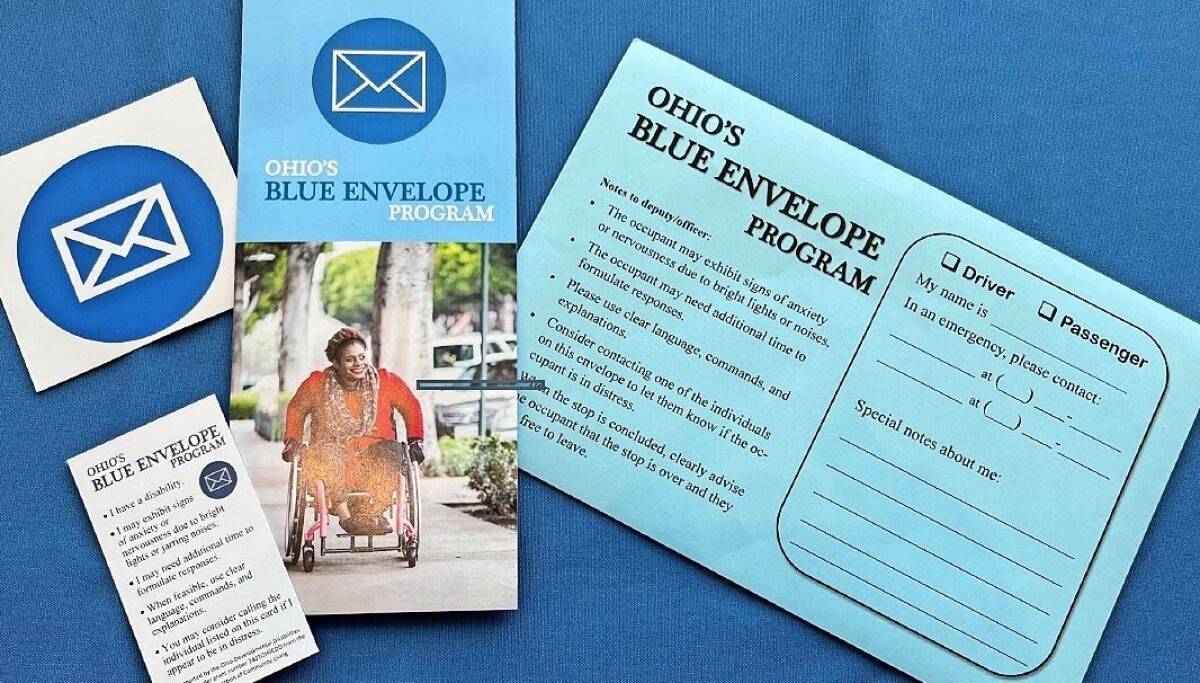 Ohio's Blue Envelope Program is designed to help bridge communication gaps during traffic stops. Participants receive a blue envelope that contains important documents and information. During a traffic stop, the driver can hand the envelope to an officer, immediately signaling that they may need additional time to process instructions or communicate effectively.
Why It Matters
The Blue Envelope Program helps:
- Reduce anxiety during law enforcement interactions.
- Increase understanding of disability-related communication needs.
- Prevent misunderstandings.
- Promote safer and more positive encounters.
It is a simple tool that can make a meaningful difference for both drivers and officers. You can get a Blue Envelope during normal business hours at the Lucas County Board of Developmental Disabilities.
Keith's Law
Keith’s Law expands Ohio’s existing Communication Disability Law by broadening the state’s voluntary disability registry to include people with a range of disabilities—not just communication disabilities. Under the law, individuals with a diagnosed disability, as well as parents or legal guardians of minors with disabilities, can complete a disability verification form to voluntarily provide this information. The information is added to a database accessible through countywide 9-1-1 systems.
The goal is to help law enforcement officers, emergency medical personnel, and firefighters know when a person they encounter during a 9-1-1 response has a disability, giving first responders important information that may help them better understand and respond to the situation.
Joshua Alert
Governor Mike DeWine signed legislation establishing the Joshua Alert (House Bill 359) in September 2026.
The alert, named in honor of Joshua Al-Lateef, was created to help locate missing individuals who may be unable to seek help or ensure their own safety due to developmental disabilities, autism, mental impairment, or significant communication limitations.
When a Joshua Alert Can Be Activated
Under Ohio law, similar to an AMBER Alert, a Joshua Alert may be activated when investigators determine that a missing individual:
- Is nonverbal;
- Has limited communication abilities; or
- Otherwise lacks the capacity to seek help or ensure their own safety.
There must also be sufficient descriptive information available to help the public assist in locating the individual.
Special Protection for Children
The law includes an important provision for children under 18 who have autism spectrum disorder or another developmental disability.
When qualifying information has been verified, law enforcement must notify the statewide alert system as soon as possible, recognizing the heightened risks associated with wandering and elopement incidents involving children with developmental disabilities.
Why the Joshua Alert Matters
When a vulnerable person goes missing, time is critical.
The Joshua Alert enables law enforcement to quickly share information with:
- Media outlets
- Emergency management agencies
- Community members
- Transportation officials
- Public safety partners
By rapidly mobilizing the public, the alert increases the likelihood of a safe recovery.
These initiatives recognize the important reality that effective communication and timely response saves lives. As awareness of these programs grows, Ohio families, advocates, law enforcement agencies, and community members can work together to create a safer, more inclusive state where people with disabilities are supported, understood, and protected.